

Against a classical and authentic background of old pine trees
said to be painted by an artist belonging to the Kano School in the Edo Period,
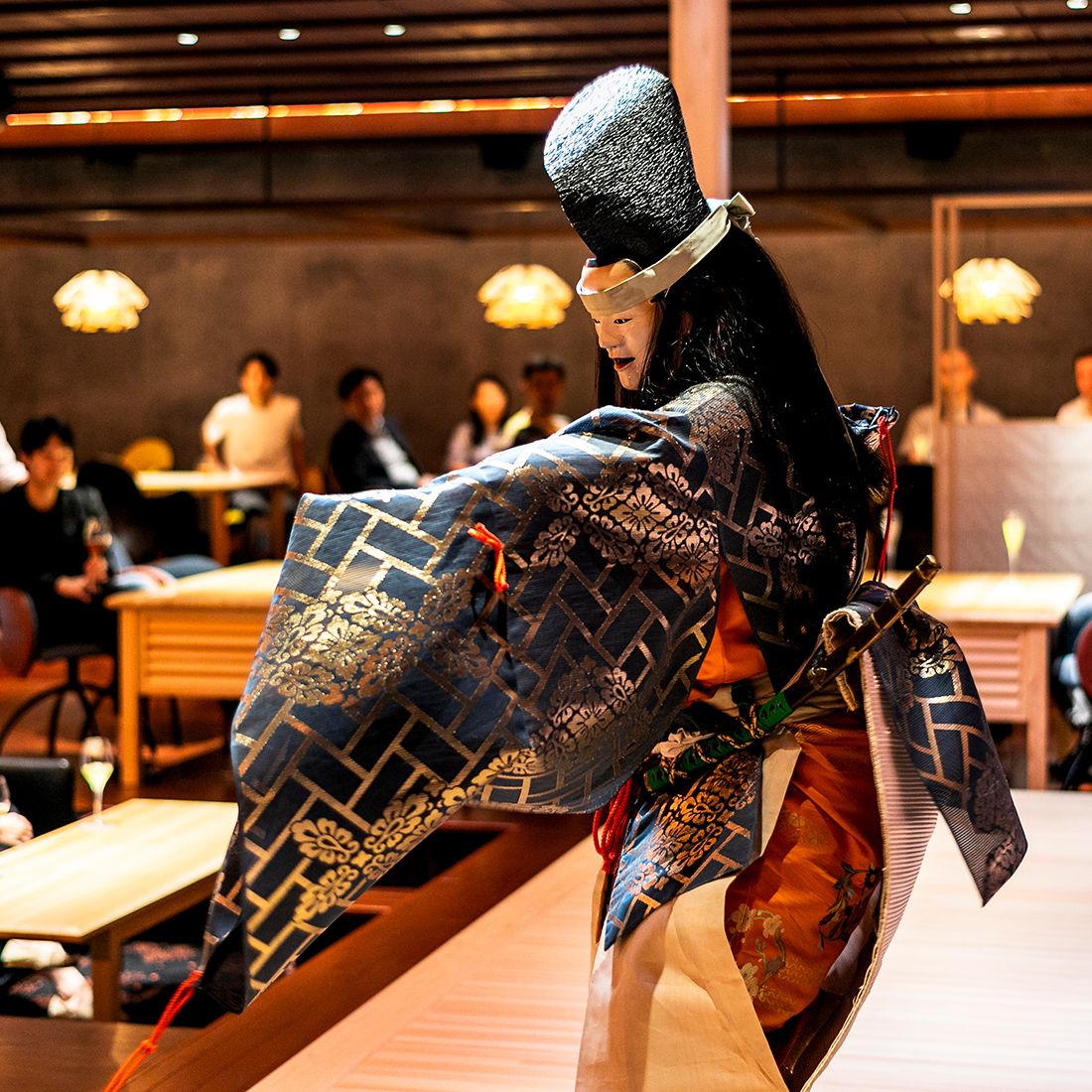
watch stage performances of traditional performing arts
such as Noh, Kyogen, Japanese dance, Kagura,
and ancient Japanese court music that transcend traditional schools.
Enjoy a "feast" of these Japanese traditional performing arts up close,
a luxurious experience unique to SUIGIAN.
| April |  | |||||
|---|---|---|---|---|---|---|
| Sun | Mon | Tue | Wed | Thu | Fri | Sat |
| 1 | 2 | 3 | 4 | 5 | ||
| 6 | 7 | 8 | 9 | 10 | 11 | 12 |
| 13 | 14 | 15 | 16 | 17 | 18 | 19 |
| 20 | 21 | 22 | 23 | 24 | 25 | 26 |
| 27 | 28 | 29 | 30 | |||
Regular HolidaySpecial Performance
Regular HolidaySpecial Performance
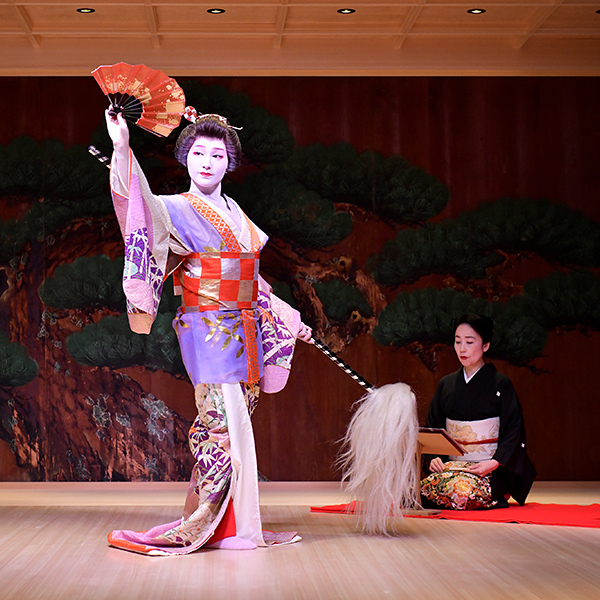
These female artists composed of Nihon-buyou, Nagauta, Koto song, Shakuhachi performers convey first-class art.
Enjoy food and drink while watching the performance.
This condensed version of the dance is about 7 to 8 minutes long and can be performed multiple times, making it the perfect performance for a meal or conversation.
Nihon-buyou: Japanese traditional performing art, which is to dance to the Japanese classical music.
Nagauta: Classical Japanese song accompanied by shamisen.
Koto song: The "Koto," also known as "Japanese harp," is a traditional Japanese stringed instrument similar to a zither.
Shakuhachi: A vertical bamboo flute (with four holes in front and one in back).

A performing arts that offers up a prayer for long life, abundant harvest of crops, and cleansing of misfortune; additionally, many performance programs feature Noh plays and the myths of Chronicles of Japan, etc. as a theme.
It is a traditional art greatly loved over the ages by the masses, and even now is indispensable to shrine festivals.
Eating and drinking while watching Kagura is a Shinto ritual called “Naorai” fed by the power of the gods.